Review of the Mrc Kuro Kage Black Hbp Vs the Mrc Kuro Kage Black Tini
Pros: Four singled-out driver shaft profiles are available in a wide range of flexes. Paderson's filament-wound construction (used in three profiles) offers a unique feel. By premium shaft standards, these are a bargain at $199 each.
Cons: Express weight options.
Who They're For: Anyone can play a Paderson shaft.
The Review
Buying a golf game shaft is similar buying a new pair of running shoes. If the shoes don't fit your human foot, it doesn't affair how good their technology is. Yous're going to run slower, and you're not going to be as comfortable equally you lot could be.
A golf shaft is the aforementioned way. If it doesn't fit your swing, you're not going to hit shots as far or direct as yous could. A mismatched shaft won't give y'all blisters like mismatched shoes, but it will article of clothing on your confidence. For golfers, that's arguably fifty-fifty more painful. Then the claiming for premium shaft makers like Paderson, which is targeting both professional and average golfers, is two-fold. The company has to create several types of shafts in an effort to fit every bit many golfers every bit possible, but also include technology that has its shafts stand apart from its competition.
While non a household name now, Paderson has the traits of a shaft visitor that could be. That'south thanks to its filament-wound manufacturing technique, which is used in three out of the four commuter shafts the visitor produces. It's unique to the industry, and also used in the company's fairway forest, hybrid/utility and iron shafts. To learn more virtually Paderson'southward claims and technologies, you can read this in-depth Q&A we did with company CEO Jason Horodezky. For the purposes of this review, however, I'll practice my best to explain the company's technologies equally simply as possible.
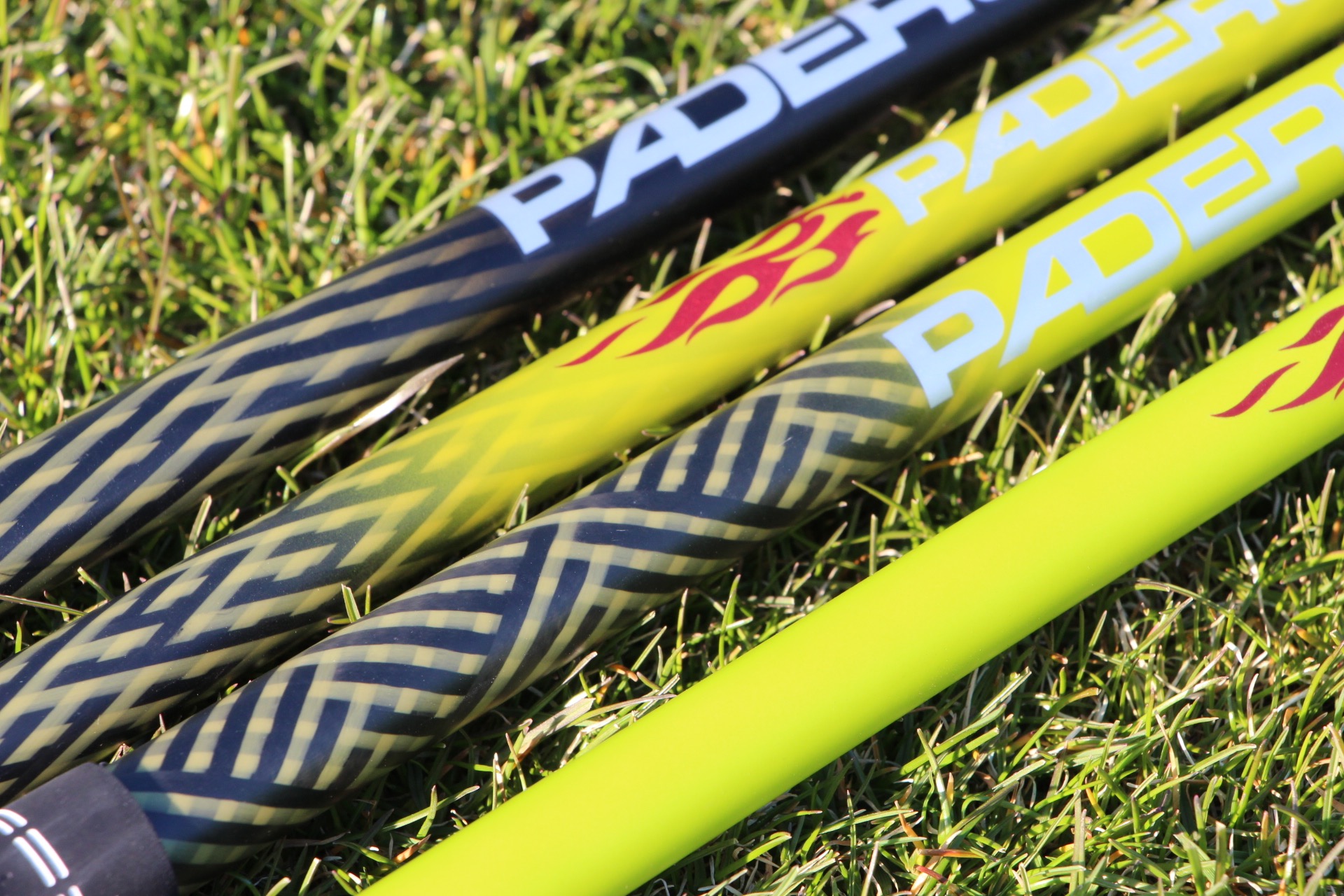
Most graphite shafts are made from several sheets of carbon fiber and resin, a glue that holds the fibers together. To create a shaft, these sheets, chosen "pre-preg," are wrapped tightly around a steel rod called a "mandrel," which sets a shaft's geometry. Different types of pre-preg have dissimilar characteristics, and sometimes exotic materials are used to change those characteristics, which generally bulldoze upwards the cost. It's the thickness, stiffness, torsional qualities and orientation of the materials used that make up one's mind the weight, stiffness and bend profile of each shaft. In one case the wrapping procedure is consummate, the shafts are put in a special oven, where the sheets are laminated, or melded together, to create a graphite tube. The shafts are then sanded smooth and painted, creating the finished product.
Paderson's shafts are formed on a mandrel, too, but the filament-wound procedure used for three of the commuter shafts tested (KG860, KG860TP and the upper part of KG972) is much unlike. They are, in essence, "braided" from two continuous strands of carbon fiber and kevlar, which the company says allows its shaft to non only be more than consistent, just create superior free energy transfer when compared to other shafts. Paderson says it tin really "pre-load" tension in its shafts, harnessing the energy of the vibrations created during the swing to increase ball speed.
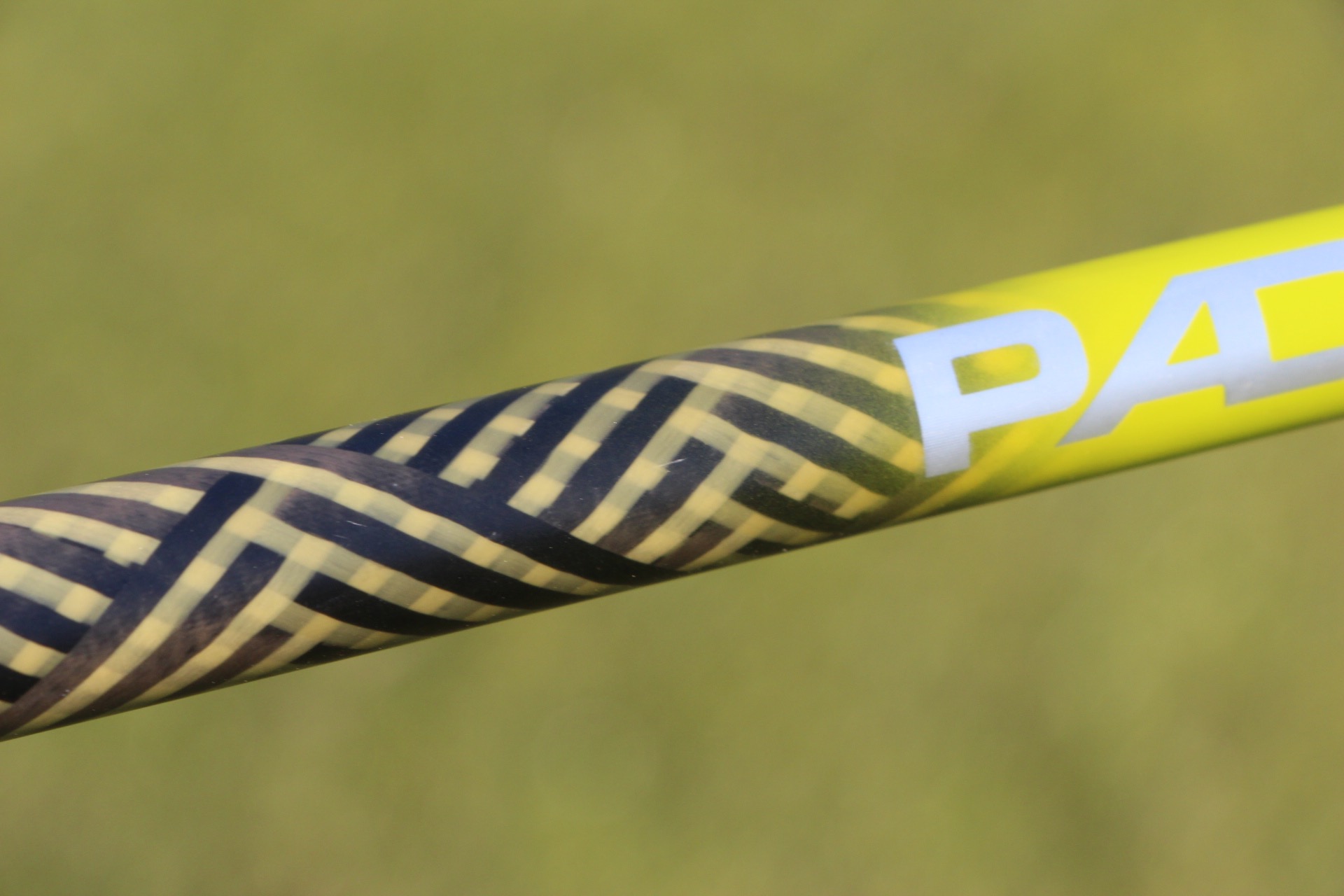
The visible weave is show of Paderson's filament-wound construction.
Co-ordinate to the company, one of its iv commuter shaft models will piece of work for any golfer, every bit they're available in a variety of flexes ranging from Ladies to XX-Stiff. Different many shafts on the marketplace, even so, golfers can't pick the weight and flex of Paderson shafts independently. Each flex is constructed with a specific weight the company says optimizes ball flight, so weight options depend on shaft model and flex.
Bolstering Paderson's consistency claims is that the filament-wound process does not require its shafts to be sanded, and then the texture seen on its shafts is non cosmetic, just rather the bodily advent of a shaft's fibers, sealed with a layer of clear-coat.
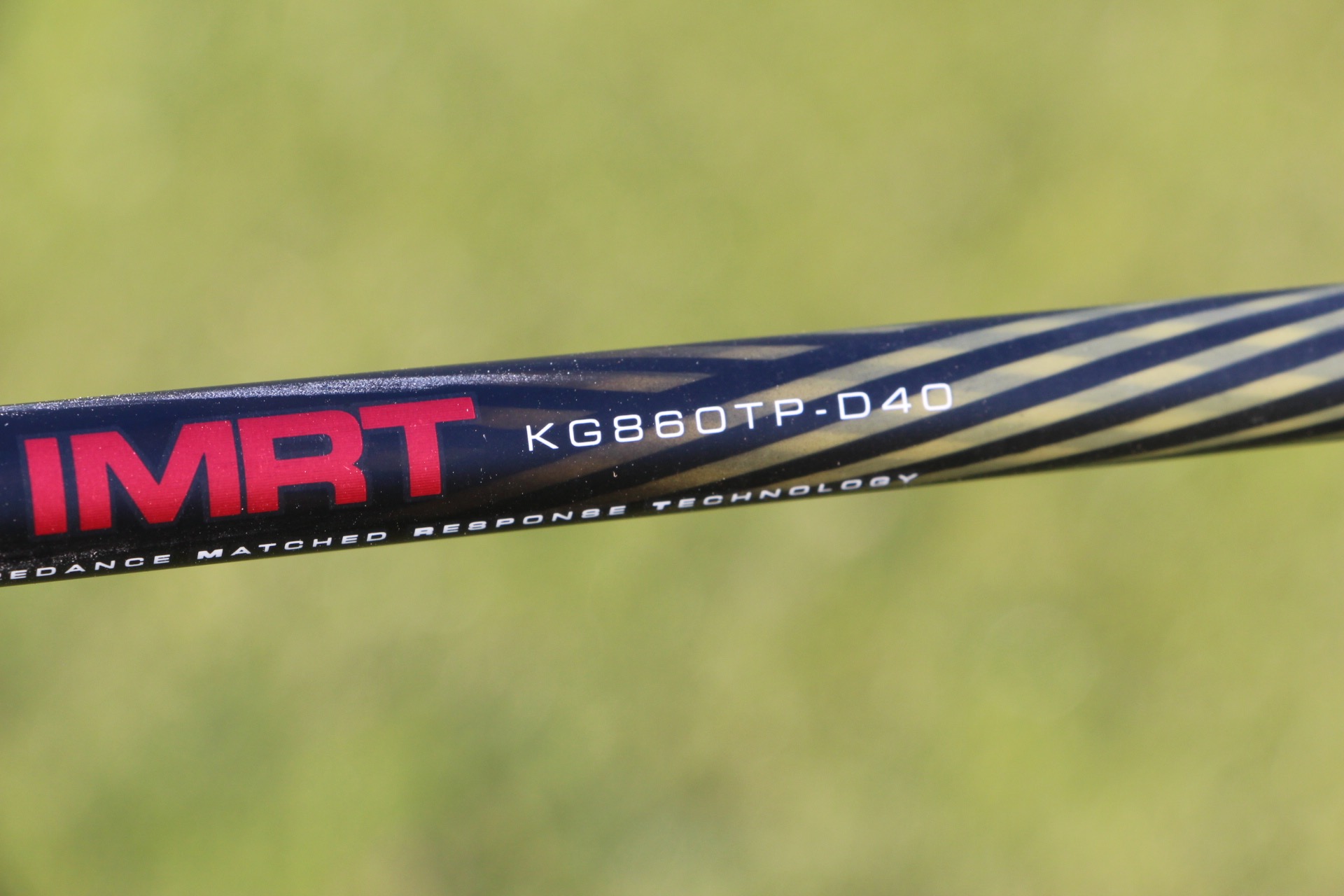
Both Paderson'south KG860TP and KG860 shafts are fully wound from butt to tip.
Paderson also makes shafts that aren't fully filament-wound, and claims its lamination technique is superior to typical processes. Its KG972 shaft, for example, uses a filament-wound upper portion and a laminated lower portion. The visitor's Amorphous shaft, on the other paw, is 100 percent laminated. What's dissimilar about Paderson's lamination process, co-ordinate to the company, is that it uses vacuum-curing, a temperature-controlled procedure that pulls resin through the shaft to minimize resin content, which allows for more than fine-tuned designs.
Intrigued? So was I, and so I put Paderson'south shafts to the examination.
The Testing Data
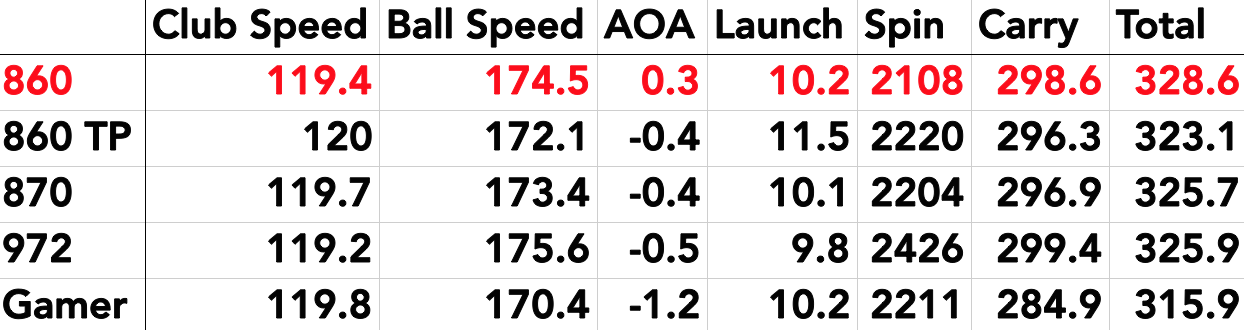
I sent my launch monitor and swing profile information to Paderson, which in turn sent me four of its latest shaft models to test. My results are above, but I feel that the numbers don't tell the whole story. For that reason, I've included an private write up virtually each shaft below.
Dispersion
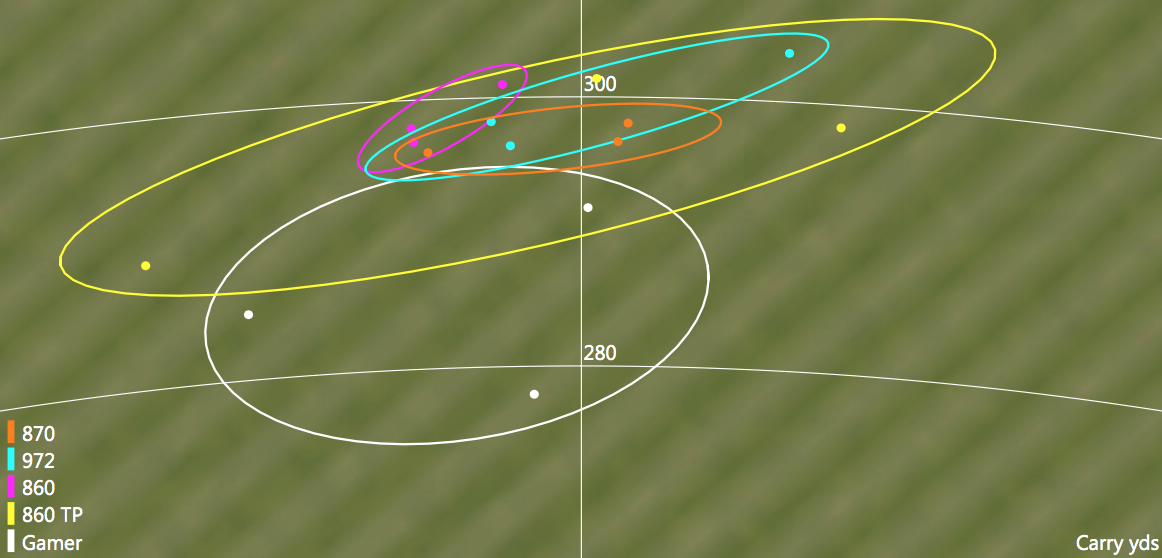
Testing Process:I took the four Paderson shafts, as well as my gamer shaft I was fit for in the fall of 2015, to Carl'due south Golfland in Bloomfield Hills, Mich. I tested all five shafts at its Launch Pad custom-fitting facility on Trackman. I used a TaylorMade M2 driver (9.5 degrees, ready to neutral) and each of the shafts tested measured 45.5 inches.
KINETIXX Kevlar Green 860TP
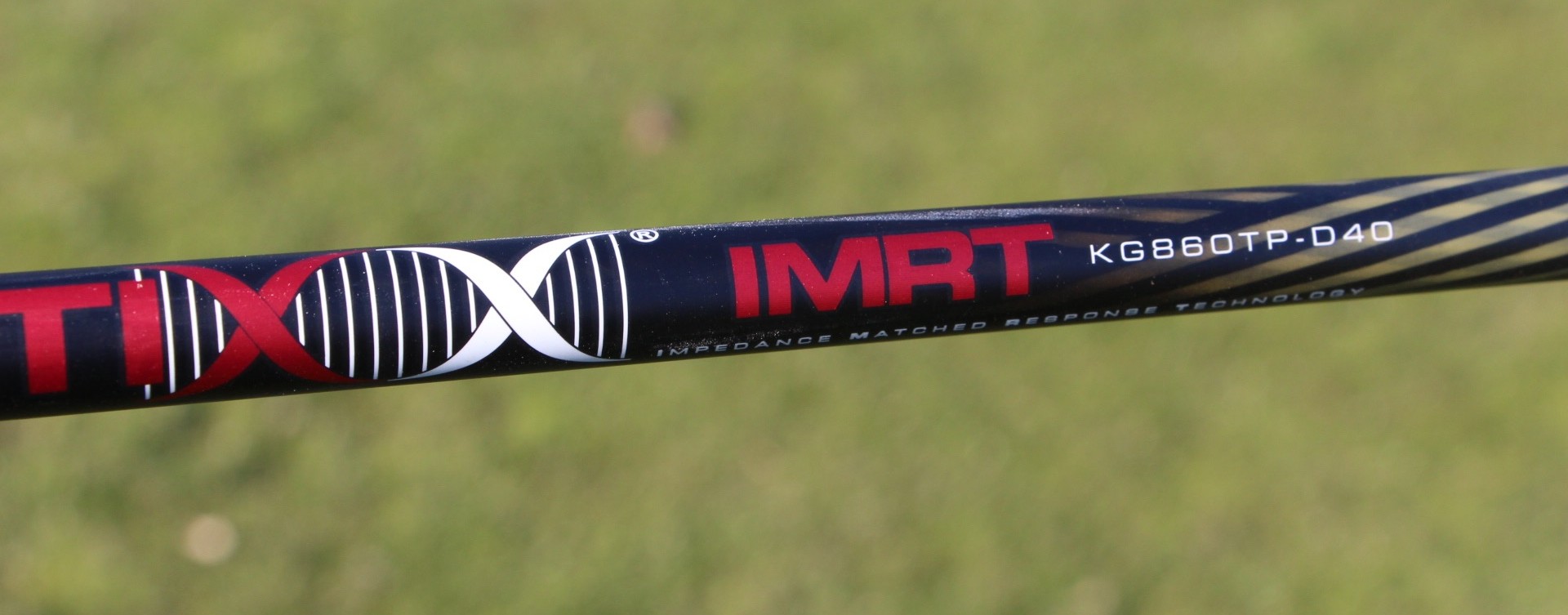
Correct now, the graphite shaft market is trending toward the tip-stiff, low-torque designs shafts that are regularly finding the winner'south circumvolve on the PGA Tour. If those shafts accept worked successfully for you, then the 860TP could be the Paderson shaft that fits y'all best. It is the lowest in torque of whatever Paderson commuter shaft, and has also has the stiffest tip section. That makes it a expert fit for golfers with an aggressive transition, or those who tend to hook the ball.
I tested all the Paderson shafts in a D40 flex, which equates to an Ten-flex, and more than the others, the 860TP felt very stout and stable. I was impressed with how smooth and balanced it felt for a high curve-point shaft, though.
With the 860TP, I had the highest average swing speed, which gave it the greatest potential for maximum altitude. I struggled to notice the center of the face, however, which is why I didn't generate as much brawl speed with it. The shaft did create the highest launch bending, and similar all the Paderson shafts, it outperformed my gamer, a depression-torque, tip-stiff 70X shaft that was most similar to the 860TP.
KINETIXX Kevlar Greenish 860
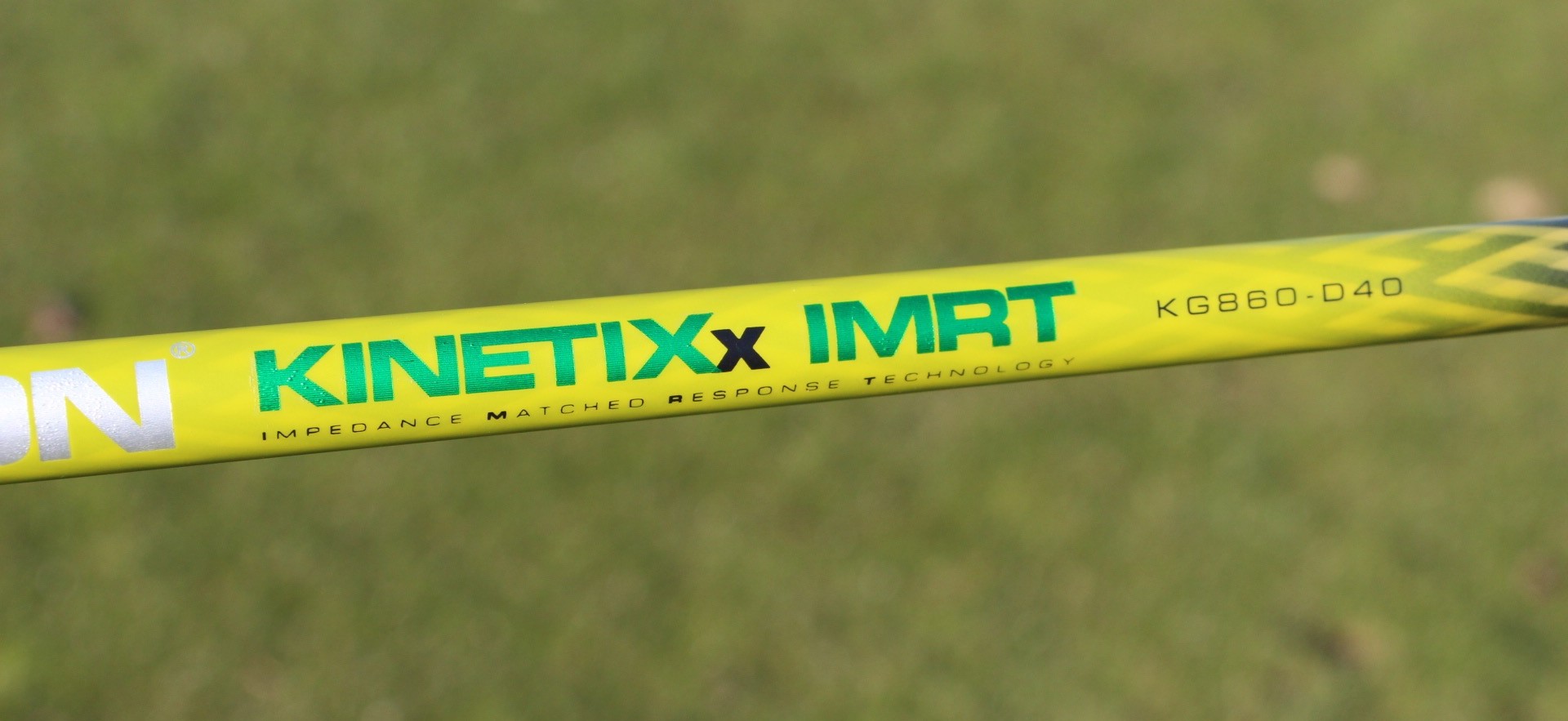
The Kevlar Green 860 is Paderson's "baseline" shaft. It fits the widest segment of the golfing population as a whole, and suited my swing improve than the 860TP due to its slightly softer tip section and higher torque. I liked the style information technology felt, and equally you tin can see in the dispersion graphic above, I striking it the almost consistently.
My angle of attack was also the most up, or positive, with the 860, which helped me create the longest total distances with the shaft. If I was playing in a tournament tomorrow, this is the shaft I would play.
KINETIXX Kevlar Green 972
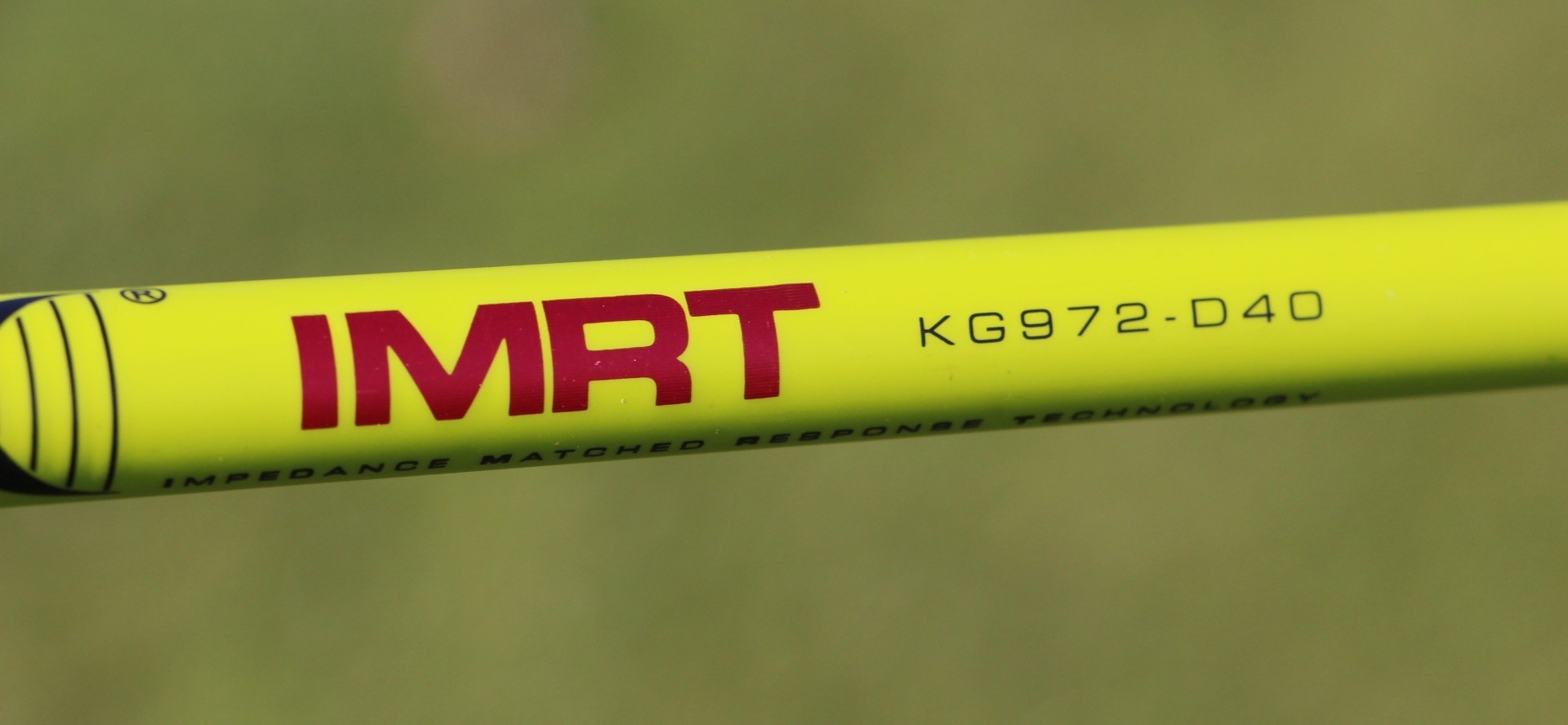
To me, the the KG972 is Paderson's virtually interesting shaft, with a filament-wound upper half and a laminated lower one-half. The multi-construction approach gives the shaft a slightly higher remainder signal than Paderson's other driver shafts, or "counterbalancing" event. It tends to fit golfers with a smooth transition, according to the company, and felt extremely easy to swing in testing.
While the 972 created the fastest ball speeds and longest carry distance, its comparatively softer-tip design didn't adapt my swing. I felt a lot of "boot" at the bottom, and I felt equally though it had more describe bias than the others.
KINETIXX VMT Vacuum Cured KVMT870
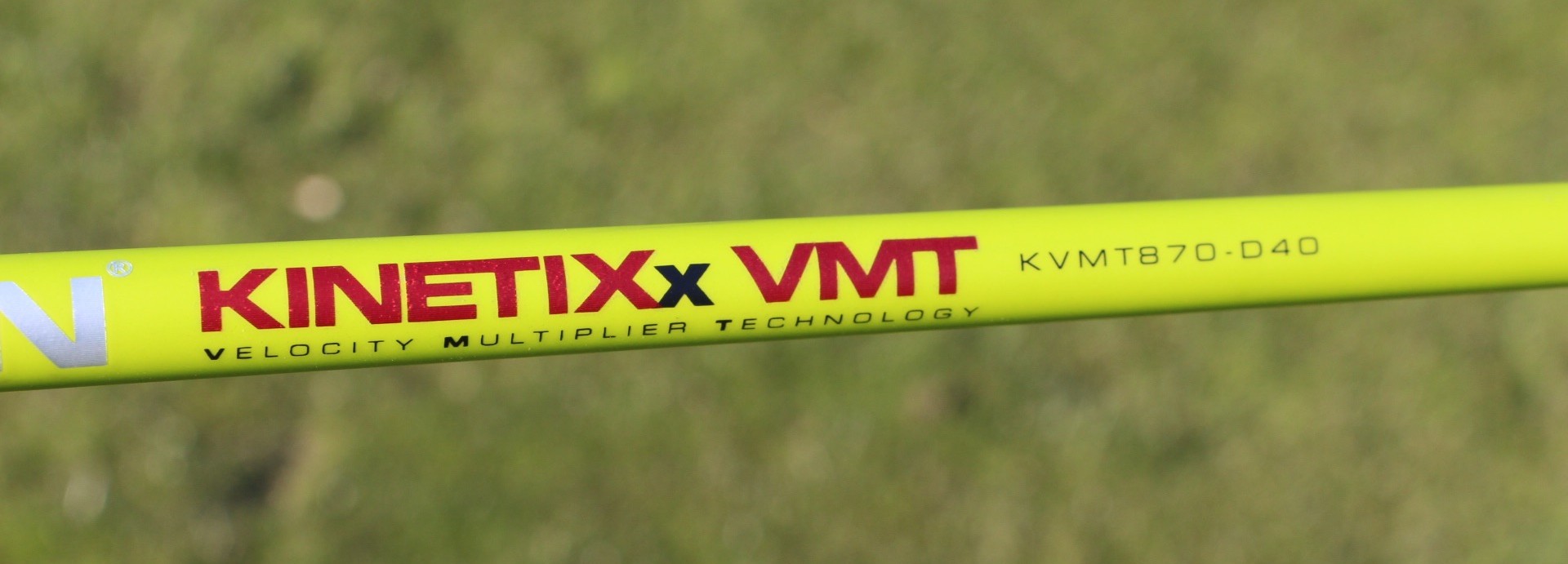
The 870 has gained traction in the long-drive community. It's a fully laminated shaft, and does not utilize the company'due south filament-wound technology.
The 870 has a dual kickpoint, according to Paderson, which causes the shaft to bend low in the butt and high in the tip to improve free energy transfers for certain players. At 66 grams, it was as well 5-ten grams lighter than the other Paderson shafts I tested. The 870 felt more than active than all but the 972, still, and I preferred the heavier weight and more than stable feel of the 860 and 860TP shafts.
The Takeaway
At $199 each, Paderson's shafts are more affordable than most premium shafts, and my testing showed that one of the company's shafts has the potential to come across, or in my example exceed the functioning of your current shaft. If one of Paderson's shafts suits your swing, and one likely volition, it deserves serious consideration — even among shafts that cost hundreds more.
Your Reaction?
- Similar 178
- LEGIT 25
- WOW 10
- LOL ii
- IDHT 3
- FLOP 0
- OB 0
- SHANK 20

Source: https://www.golfwrx.com/411172/mrc-shaft-shootout-tensei-ck-pro-white-kuro-kage-xt-and-diamana-bf-series/
0 Response to "Review of the Mrc Kuro Kage Black Hbp Vs the Mrc Kuro Kage Black Tini"
Post a Comment